An ‘Amazing’ Mount Rogers Mobile Crisis Team Supports Youth in Care
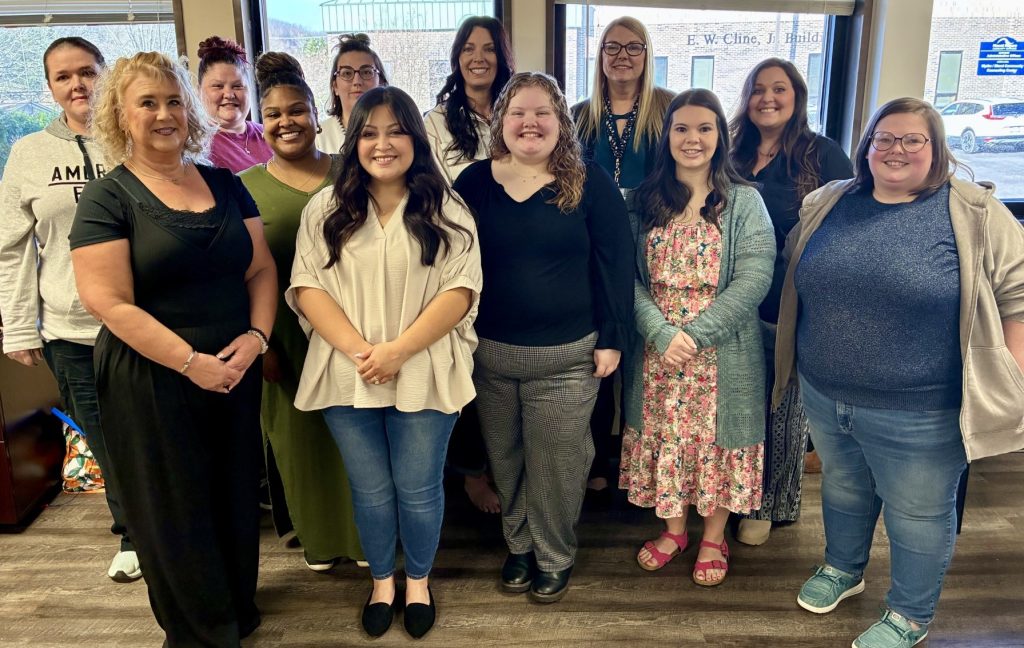
Photo (left to right): Becky McMillian, Lisa Spencer, Sadie Morris, Ambur Wheeler, Lillian Gould, Destinee Johnson, Tonya Hawks, Kelly Rupe, Christy Hawks, Sianna Osborne, Christin Ardito, Kayleigh Hicks. Not pictured: Heather Cochran, Stefan Killon, Zach Cleland, Heather Dean, and Jillian Johnson.
Debbie Riggs has a word she uses often to describe the Mount Rogers Community Services mobile crisis team — “amazing.”
For nearly three years, Riggs has served as Program Director at the 89-acre campus of the Presbyterian Children’s Home of the Highlands (PCHH) in Wytheville. In that time, the Mount Rogers mobile crisis team has become an invaluable partner in supporting youth on campus.
“I truly believe it’s one of the most effective services we have in a crisis situation,” Riggs said.
At PCHH, youth ages 9 to 17 live in residential cottages designed to provide structure, stability, and support. The campus also offers an Independent Living Program (ILP) for older youth, typically ages 18 to 20, focused on preparing residents for independence and long-term success.
Many of the youth served at PCHH have experienced significant challenges. They are working toward stability, healing, and a positive future.
A Strong Partnership
Through strong partnerships and a supportive campus environment, youth can grow, build confidence, and develop the skills needed for long-term success. Working with Mount Rogers lets staff respond to mental health crises in a way that prioritizes dignity, familiarity, and continuity of care.
Transporting youth to an emergency room can be stressful and overwhelming. Instead, the mobile crisis team responds directly on campus.
“Having the team come to us makes a tremendous difference,” Riggs said. “It helps de-escalate situations in a familiar environment and prevents additional stress for the youth.”
Riggs recalls a previous experience where a hospital visit lasted several days. In contrast, the mobile crisis team going on site allows them to address situations more quickly and effectively.
“It keeps the situation from escalating further,” she said. “It allows the youth to feel supported without making it a larger, more overwhelming experience.”
The Mobile Health Crisis Team
Christy Hawks has led the 14-member mobile crisis team at Mount Rogers since last July. While the team has a two-hour response window, they often respond much sooner.
Upon arrival, the team:
- Assesses the individual’s needs.
- Works to stabilize the situation.
- Determines whether a higher level of care is necessary.
They also provide short-term stabilization services within the community to help reduce symptoms and prevent further escalation. Hawks touts the importance of connection in their work.
. “When we work with someone in crisis, it’s critical to meet them where they are,” she said. “We focus on making sure they feel heard, supported, and understood.”
Teamwork and Rapport
Team members build rapport in creative ways — even incorporating personal interests of the youth to create meaningful connections. One time, a team member brought a personal nail kit to engage with a youth who wants to become a nail technician.
“We’re always thinking outside the box,” Hawks said. “It’s about building trust.”
Hawks also credits the team’s success to strong teamwork, compassionate staff, and the administrative support that ensures timely and accurate service coordination.
It’s a true partnership between Mount Rogers Community Services and PCCH. It’s a shared commitment to providing responsive, community-based care. The kind of care that meets youth where they are — both physically and emotionally — while supporting long-term stability and success.
About Mount Rogers Community Services — Mount Rogers is a top provider of community services for mental health, intellectual and developmental disabilities, and substance use disorders in southwest Virginia. We also offer services such as geriatric, counseling, early intervention, and others in Wythe, Smyth, Carroll, Bland, and Grayson counties and the city of Galax.